
The Other Side of RV Electricity
Converter and inverter are two RV electrical terms I have heard for years. I also confuse the two regularly. We have an inverter in our RV. There is even an inverter switch in our closet that stays on all the time. I knew it was there, but if you had asked me what the inverter actually did, I wouldn’t have been able to explain it.
Electricity just isn’t my thing.
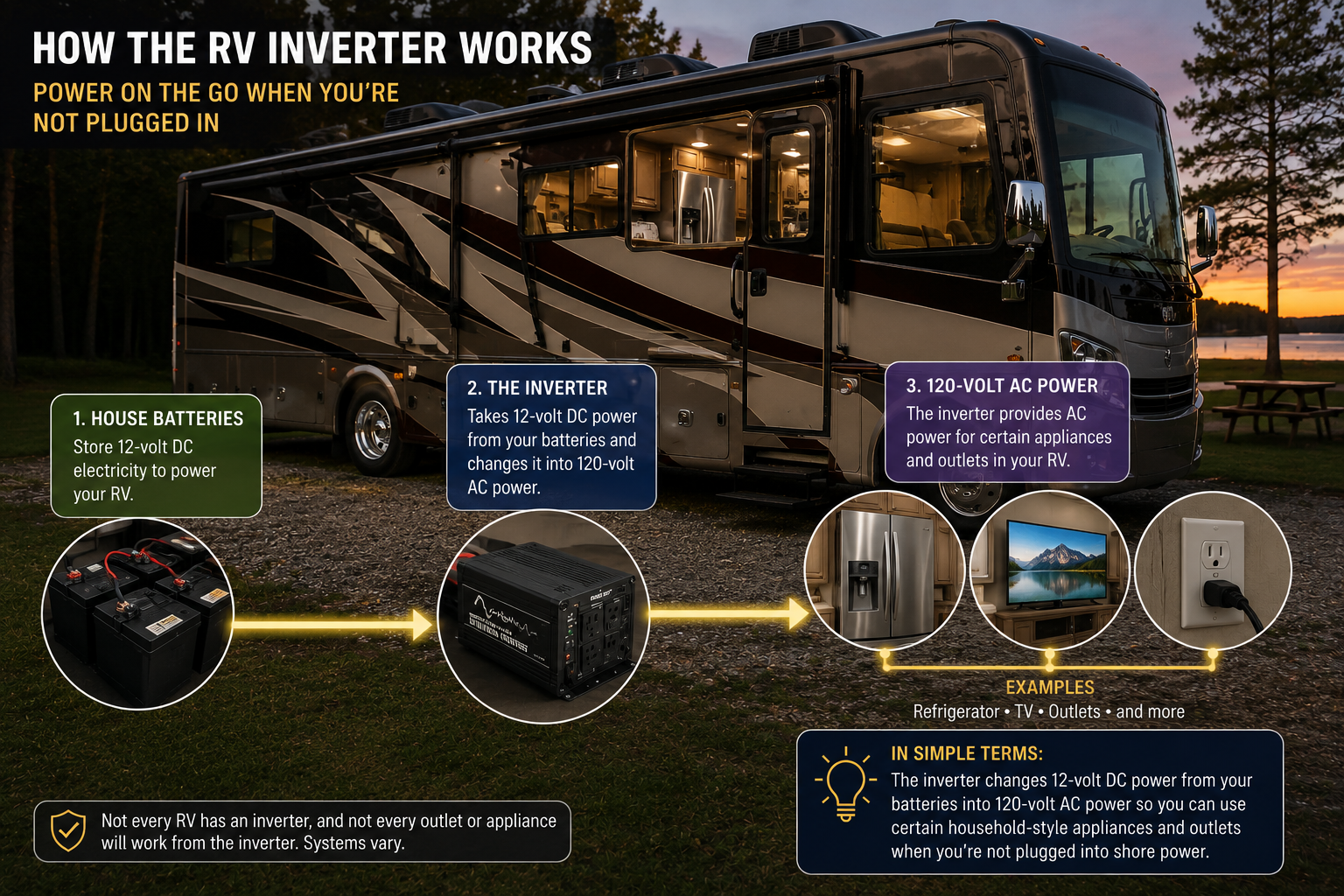
Fortunately, the basic job of an RV inverter is much easier to understand once you know that an RV uses two different kinds of electricity. So, what is an RV inverter? In simple terms, it takes electricity stored in your RV’s house batteries and changes it into the type of electricity certain household-style appliances and outlets can use.
Let’s keep it at that level and figure out how it fits into the RV electrical system.
First, Remember the Two Kinds of RV Electricity
Your RV uses both 12-volt DC electricity and 120-volt AC electricity. Your house batteries store 12-volt DC power. Campground shore power supplies 120-volt AC power. If you’re still wondering why an RV needs both, Why Does My RV Have 2 Kinds of Electricity? explains the two electrical systems and what they do.
The important part for understanding an inverter is this: some things in your RV need 120-volt AC electricity, but your batteries store 12-volt DC electricity. Those aren’t the same thing.
That’s where the inverter comes in.
What Does an RV Inverter Do?
An RV inverter takes 12-volt DC electricity from your house batteries and changes it into 120-volt AC electricity. That allows certain things that normally need AC power to operate using energy stored in your batteries. Think about a residential refrigerator like the one in our Class A. It’s designed to use 120-volt AC electricity. At a campground, shore power can provide that electricity. But an inverter can also take DC power from the house batteries and turn it into AC power that the refrigerator can use when shore power isn’t available.
Depending on how an RV is equipped and wired, an inverter may also provide power to certain outlets, televisions, or other AC equipment.
The key word there is certain.
Having an inverter does not necessarily mean every outlet and every appliance in your RV will work from battery power. Inverter systems vary considerably from one RV to another.
For Inverter 101, though, the basic idea is simple: The batteries have DC power. Some equipment needs AC power. The inverter changes DC into AC.
Where Does the Inverter Get Its Electricity?
This is an important distinction because an inverter doesn’t actually create electricity. It uses energy already stored in your house batteries. As you use appliances through the inverter, you’re using some of that stored battery energy. Eventually, those batteries will need to be recharged.
That’s very different from being connected to campground electricity, where an outside source is supplying power to your RV. What Happens When I Plug In My RV? explains what happens behind the scenes when shore power becomes your RV’s source of electricity.
An inverter gives you another way to use some 120-volt equipment when that outside source isn’t available, but ultimately the energy has to come from somewhere. With an inverter, it’s coming from your batteries.
Why Would an RV Need an Inverter?
This question makes much more sense to me now that I understand what an inverter actually does. If an RV has equipment that requires 120-volt AC electricity, an inverter can allow some of that equipment to operate from the house batteries when the RV isn’t connected to shore power. A residential refrigerator is an easy example.
Our Class A has one, which means our refrigerator needs AC electricity. Our RV also has an inverter. That gives the electrical system a way to use stored battery power to provide the type of electricity the refrigerator needs when shore power isn’t supplying it.
Not every RV has the same setup. Some RVs don’t have an inverter at all. Others have smaller inverters that power only certain equipment, while larger systems may supply AC power to more of the RV. That’s one reason you shouldn’t assume that because something works from the inverter in someone else’s RV, it will work the same way in yours.
Is an Inverter the Same as a Converter?
No, and this is probably the easiest part of RV electricity to mix up. The names sound almost identical, but they work in opposite directions. A converter takes 120-volt AC electricity and changes it into 12-volt DC electricity. An inverter takes 12-volt DC electricity and changes it into 120-volt AC electricity.
If you just read What Is an RV Converter?, think of the inverter as electricity making the return trip.
Converter: AC to DC.
Inverter: DC to AC.
That is finally simple enough for me to remember.
Does My Inverter Power Everything in My RV?
Probably not, although the answer depends entirely on your particular RV and inverter system. This is where it’s important not to make assumptions. Just because an RV has an inverter doesn’t mean you can disconnect from shore power and use everything exactly as you would at a full-hookup campsite.
Air conditioners, electric water heaters, microwaves and other high-demand appliances can require a lot of electricity. Whether an inverter can power a particular appliance depends on the inverter, the battery bank and how the RV’s electrical system was designed. Even the regular wall outlets can vary. Some RVs have only certain outlets connected to the inverter.
You don’t need to calculate watts or study electrical diagrams to understand the basic concept. You just need to know that an inverter has limits and that those limits are different from one RV to another. If you’re unsure what your inverter powers, your RV owner’s manual is a good place to start.
Do I Have to Turn My Inverter On?
That depends on your RV. Some inverter systems have a control panel or switch inside the coach. Others may operate differently depending on how the RV was designed. We have an inverter switch in the closet of our Class A, and we normally leave it on. For years, that was pretty much the extent of my inverter knowledge.
I knew we had one. I knew there was a switch. I didn’t really know what happened after that. Now I understand that the inverter is part of the bridge between our house batteries and equipment that needs AC electricity. And that’s really all I need to understand at this point.
What Happens When the Batteries Get Low?
Because the inverter is using electricity stored in your house batteries, it can’t provide power forever. As you use that stored energy, the batteries discharge. How quickly that happens depends on your battery bank and what you’re powering. A residential refrigerator and a small electronic device don’t use electricity at the same rate. Larger electrical loads can use stored battery energy much faster.
There are plenty of calculations we could get into here, but that’s beyond what we need for a basic understanding of an inverter. The important thing to remember is simply that an inverter changes battery power into usable AC power. It doesn’t give you an unlimited supply of electricity.
Final Thoughts
So, what is an RV inverter?
It’s a device that takes 12-volt DC electricity from your house batteries and changes it into 120-volt AC electricity that certain appliances or outlets can use. It doesn’t create electricity, and it doesn’t necessarily power everything in your RV. It simply changes the electricity already stored in your batteries into another form. And if you confuse an inverter with a converter like I do, remember which direction the electricity is traveling.
The converter takes AC power and turns it into DC power.
The inverter takes DC power and turns it into AC power.
There is a lot more we could learn about inverters, batteries, and how much power different appliances require. But for Inverter 101, understanding those two directions is a pretty good place to start.
Further reading: