
If you’ve ever camped in South Texas, along the Gulf Coast, or during the summer anywhere humid, you already know that sticky air can sneak inside your RV. The problem is, humidity in your RV isn’t just about feeling uncomfortable—it can lead to long-term damage to the inside of your RV, musty odors, and even mold/mildew if you don’t get it under control.
The good news? With a few smart tools and habits, you can protect your RV and keep your camping trips fresh and comfortable.
Why Humidity in Your RV is a Big Problem
Damage to Furniture and Finishes
Moisture in the air doesn’t just disappear—it lingers. Faux leather furniture, commonly used in many RVs, can peel or crack more quickly in high humidity. Upholstery can retain moisture, leading to mold growth and unpleasant odors.
Swelling Wood and Cabinets
Wood absorbs moisture easily, which means doors, drawers, and trim can swell and stick. Over time, this warping can make storage areas harder to use and even damage finishes.
Mold, Mildew, and Musty Odors
When moisture hangs around, mold and mildew thrive. You may notice black spots, staining, or that telltale “old camper smell.” Once mold sets in, it’s difficult to remove and can spread rapidly.
Electronics at Risk
High humidity increases the risk of corrosion on circuit boards, control panels, and even light fixtures. That means your RV’s appliances and systems could face problems earlier than expected.
Why Your Air Conditioner Won’t Fix Humidity in Your RV
It’s a common assumption: if you’re running the air conditioner, the air inside should be dry. The truth is more complicated. RV air conditioners are designed to cool, not to manage humidity.
– RV AC units often cool the air faster than they can remove moisture.
– Unless your system has a built-in humidistat, it won’t regulate humidity levels.
– Leaving the fan on “constant” can actually circulate humid air back into the RV.
So while your AC helps cool things down, it won’t solve humidity issues by itself.
How to Reduce Humidity in Your RV
The best strategy for managing humidity in your RV involves a combination of prevention and active moisture control. Here are proven ways to keep things dry and comfortable:
Use a Portable Dehumidifier
A small, portable dehumidifier is one of the most effective tools for reducing moisture. Place it on a countertop or table, and it will actively pull water from the air into a collection tray. Many RVers are shocked by how much water collects in just a few hours. We have two units, and I can attest to being shocked at how much water is collected in a short time period. But using them does change the comfort level.
Ventilate While Cooking and Showering
Cooking pasta or taking a hot shower can release cups of water vapor into the air. Always run your roof vent fans during these activities, and crack a window to create cross ventilation. People sometimes forget that the hot shower steam escapes out into the RV and creates extra humidity if you don’t open a vent fan.
Monitor with a Hygrometer
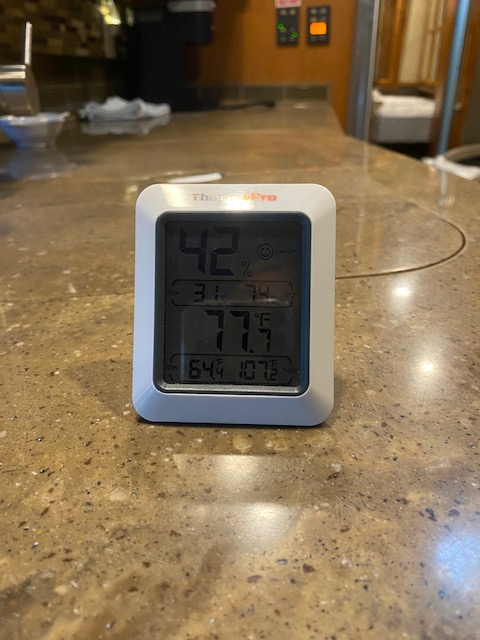
A digital hygrometer allows you to see exactly how humid the air is inside. The ideal range is 35%–55% relative humidity. If it starts creeping above 60%, it’s time to take action. We have two in our RV-one in the bedroom and one in the living area.
Seal Gaps and Leaks
Check around windows, doors, and slide-outs for any signs of damage. Use RV sealants or weatherstripping to keep humid outside air from sneaking in.
Use Moisture Absorbers
For closets, under-bed storage, and cabinets, products like Damp-Rid or silica gel packets work wonders. They’re especially helpful in spots where airflow is limited.
Keep Air Circulating
Even without the AC, a small 12V fan or a portable fan helps circulate air, preventing condensation from settling on walls and windows.
Extra Tips for Humid Camping Destinations
If you’re camping near the coast or in South Texas during peak summer, humidity will always be part of the environment. These extra steps make a big difference:
– Run your dehumidifier at night when windows and doors stay shut.
– Choose a shaded campsite to keep your RV cooler, if possible
– Wipe down windows in the morning if condensation forms overnight.
– Store extra cushions or bedding in breathable bins with moisture absorbers.
The Benefits of Keeping Humidity in Your RV Under Control
Controlling humidity in your RV isn’t just about comfort—it’s about protecting your investment. When you keep moisture levels down, you’ll:
– Extend the life of your furniture, flooring, and cabinetry.
– Prevent mold and mildew before they start.
– Improve indoor air quality and avoid musty smells.
– Keep electronics and appliances running longer.
– Make your RV feel fresh and inviting for every trip.
Final Thoughts
Whether you’re camping along the Texas coast, storing your RV during the off-season, or just dealing with summer stickiness, humidity in your RV can quickly become a problem. But with the right tools—like a dehumidifier, hygrometer, and moisture absorbers—and a few simple habits, you can keep your RV dry, comfortable, and protected for years to come.
Your RV is a big investment, and controlling humidity is one of the simplest ways to make sure it stays in great condition for every adventure ahead.